
Long Sleeve Tops for Women


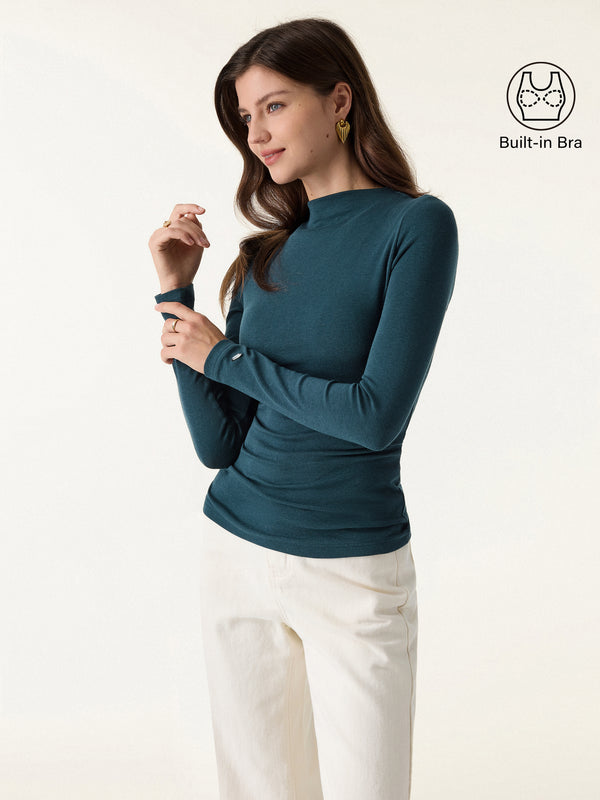


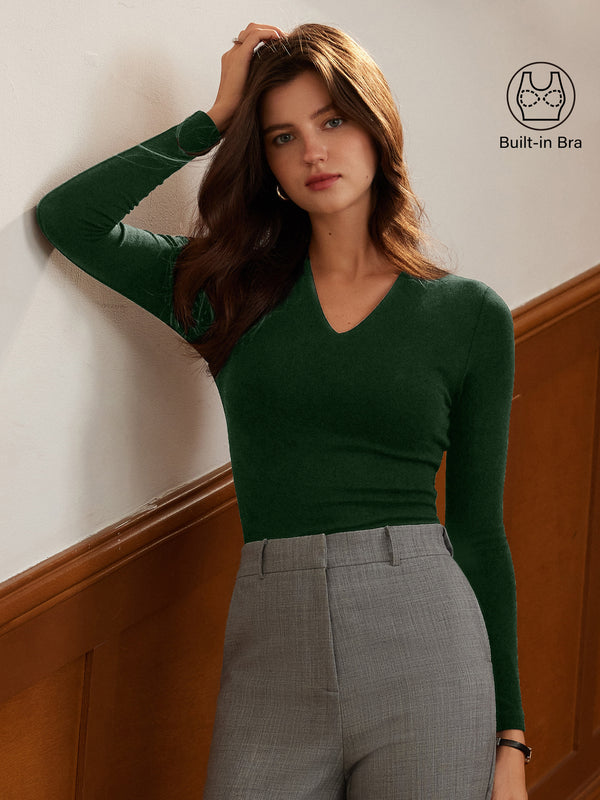


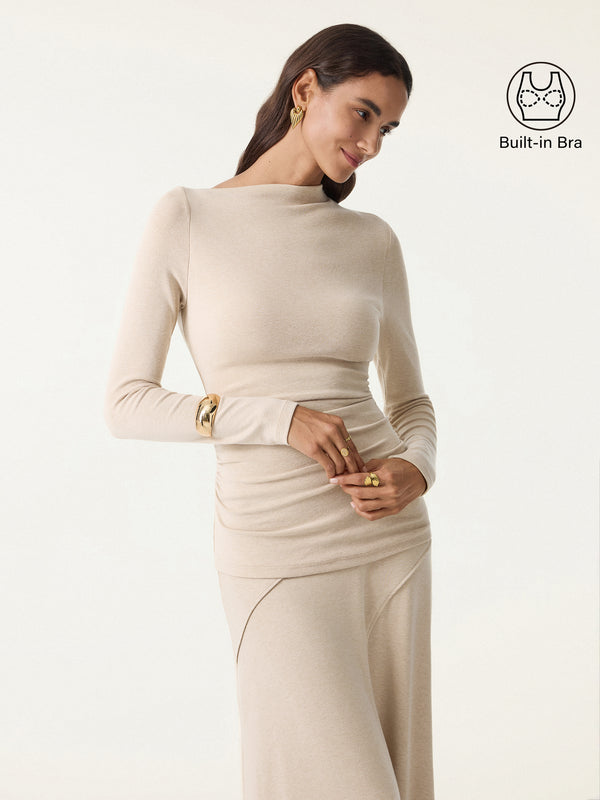


Long Sleeve Tops for Women: A Fabric Guide for Every Level of Warmth
Two long sleeve tops can look almost identical online yet feel completely different once worn. One may disappear neatly beneath a jacket, while another feels too bulky indoors. One stays comfortable throughout a full day; another becomes warm, itchy, or stretched out by lunchtime.
The difference often begins with the fabric. Before choosing a neckline or color, consider the temperature, layering needs, skin feel, and level of maintenance the top must accommodate.
Start With the Temperature You Dress For
The warmest top is not always the most useful one. A better choice reflects the environments you regularly move through.
For transitional weather or warm indoor spaces, look for lightweight, breathable materials that can be worn alone or beneath a jacket. If one top needs to work across both indoor and outdoor settings, a medium-weight fabric may offer more flexibility than a heavy thermal knit.
Cold conditions call for greater insulation, but fabric thickness is only part of the decision. Thermal constructions and wool blends can provide additional warmth without requiring an oversized silhouette. When temperatures vary throughout the day, a lighter long sleeve top combined with a removable outer layer may be easier to regulate.
Always check the warmth description of the individual garment. Even tops from the same fabric family may have different weights, coverage, or thermal properties.
Choose Fabric According to How It Will Be Worn
A top worn directly against the skin has different requirements from one used as an outer layer.
For a close-fitting top, prioritize a smooth surface, comfortable seams, and enough recovery to help the garment retain its shape. Four-way stretch can support movement, but it should not create excessive compression.
A layering top should be relatively low in bulk. Thick seams, raised textures, and loose sleeves can gather beneath blazers, cardigans, or coats. Lightweight knits and close but flexible cuts generally create a smoother foundation.
When a long sleeve top will be worn on its own, the fabric needs enough substance to create a complete silhouette. Check whether it becomes transparent when stretched and whether it clings around the waist or elbows. For work, a matte finish and controlled drape can make a soft top appear more polished without introducing the stiffness of a traditional shirt.
Compare OGL Fabrics by Wearing Experience
The OGL long sleeve tops collection includes several fabric families designed for different levels of warmth and softness. Rather than asking which fabric is universally best, consider which wearing experience suits your routine.
| Fabric | Better suited to | Main decision point |
|---|---|---|
| Eco-Mousse® | Everyday fall and winter dressing | Check the specific warmth level, as options range from light to extra warm |
| Eco-MiYaMoon® | Lightweight softness with wool or cashmere blends | Consider whether its balance of warmth and breathability suits your climate |
| Modal Spacer | Smooth, softly structured tops | Useful when you want comfort without an overly thin or clingy appearance |
| Lyocell-cashmere blends | Light, close-fitting layers | Check opacity, composition, and warmth on the individual product page |
| TENCEL™-wool blends | Lightweight warmth | Personal sensitivity to wool should still guide the decision |
| Stretch cotton | Familiar everyday softness | Look for reliable recovery and washing instructions |
Eco-Mousse® may be useful when warmth is the first priority because the collection includes different thermal levels. Eco-MiYaMoon® and lyocell-cashmere options offer another route for shoppers who prefer lightweight, softly fitted tops.
Modal Spacer has a smoother, more substantial character that can help a simple top retain definition. Stretch cotton may feel more familiar, but its long-term performance depends on the complete blend and construction rather than the word “cotton” alone.
Softness, Warmth, and Breathability Are Different Decisions
These qualities are often grouped together, but they do not mean the same thing.
A fabric can feel exceptionally soft without providing much insulation. A thick top may feel warm outdoors but become uncomfortable in a heated office. Wool blends can offer lightweight warmth, yet their texture will not suit every wearer. Stretch improves mobility, but it does not automatically make a fabric breathable or lightweight.
Decide which quality matters most for the garment’s intended role. A commuter moving between cold streets and warm transport may prioritize breathability and easy layering. Someone spending time outdoors may place greater value on insulation. For a top worn close to sensitive skin, surface texture and seam construction may matter more than maximum warmth.
When several qualities are important, look for a reasonable balance rather than expecting one garment to perform at every extreme.
Check Fabric Details Before Buying Online
Online product images show silhouette and color, but the product details usually provide more useful evidence about how a long sleeve top will wear.
Read the full fiber composition rather than relying only on a branded fabric name. Look for descriptions such as lightweight, medium weight, thermal, semi-sheer, or four-way stretch. If a top is fitted, check whether the page discusses recovery or shape retention.
Examine front, side, and back images for transparency, drape, sleeve fit, and fabric gathering. Product videos may reveal whether the material moves fluidly or holds a firmer shape. Model height and size offer context, but garment measurements are more reliable when judging body length and sleeve length.
Care requirements also affect value. A machine-washable top may fit more easily into a weekly wardrobe than one requiring delicate hand washing or frequent reshaping. Customer reviews can provide additional insight when the same comments about pilling, shrinkage, sheerness, warmth, or texture appear repeatedly.
Make the Final Choice With Three Questions
Before selecting a long sleeve top, ask:
-
Will I wear it alone or beneath another layer?
This determines how much fabric weight, structure, and sleeve volume will be practical. -
Do I primarily need softness, warmth, breathability, or a balance of all three?
Naming the priority makes it easier to compare materials without being distracted by broad claims. -
Does the care routine match how often I expect to wear it?
A beautiful fabric is less useful if its maintenance requirements discourage regular wear.
Color and neckline still matter, but they should refine the decision rather than lead it. The most useful long sleeve top is not automatically the softest, warmest, or thickest option. It is the one whose fabric works with the climate, the rest of the wardrobe, and the way the wearer moves through the day.


